IVY PLUS CONSORTIUM: AMERICA’S FINEST PRIVATE RESEARCH UNIVERSITIES
The Ivy Plus (Ivy+) consortium is a formal grouping comprised of a core group of thirteen leading private research universities from across the United States. The consortium’s nexus is formed around the eight Ivy League universities, widely considered to be America’s elite universities collection. The five other universities that make up the Ivy Plus consortium are those equally prestigious, academically selective research universities that are regarded as the peer schools to the Ivy League.
ABOUT
The terms “Ivy Plus” or “Ivy+” have been used variously over the years, particularly by college admissions professionals and prospective students when attempting to group together the top tier of American colleges and universities. The precise origin of the term is not known but it has been in use for many decades but it is believed to have derived from the name of the Ivy League – an athletics conference comprised of: Brown University, Columbia University, Cornell University , Dartmouth College, Harvard University, Princeton University, University of Pennsylvania (Penn), and Yale University, all of which are amongst the best known and most highly regarded universities in the world.


The Ivy League athletics conference was founded in 1954 as a means of consolidating informal sporting arrangements between this select group of universities that considered themselves to be peers at that time. These schools had regularly played against one another in a host of sports, particularly football, rowing, basketball etc. They were the schools that helped develop and codify American football amongst other sports. They participated in the Eastern Intercollegiate Basketball League (EIBL) (since absorbed into the Ivy League) and many of the member schools competed in the Eastern Intercollegiate Wrestling Association (EIWA) and the Intercollegiate Rowing Association (IRA). Additionally, many of the schools have a football rivalry with one or another that existed long before the creation of the National Collegiate Athletic Association (NCAA). With the advent of televised sports fixtures and the proposals of the NCAA in the early 1950s to develop college football television markets on a league and conference basis, the Ivy League colleges saw the need to establish a formalised conference to protect their markets and to operate within the NCAA structure. Whilst the colleges had long played each other and a number of other select institutions, it made sense to formalise a full sports conference around the long-established EIBL in which the same eight schools participated. The EIBL only added Brown in the years leading to the establishment of the Ivy League (and, at that stage, it was done so with the expressed purpose of establishing the Ivy League).
The schools that today comprise the Ivy League, have long considered one another to be peers athletically and academically. They have competed against one another and sometime peers (historically including schools like: Bucknell University, Colgate University, McGill University, Rutgers University, Stanford University, Syracuse University, Tufts University, United States Military Academy (Army / West Point), United States Naval Academy (Navy / Annapolis), University of Toronto in particular) both in various varsity sporting fixtures and in terms of admissions of the best and brightest minds from across North America. Today, many Ivy League conferences still maintain rivalries and occasional athletics fixtures with those one-time peer schools, especially those competing in the similarly regulated Patriot League. Thus, whilst, the Ivy League is, ostensibly, an athletic conference, it has always been a byword for exclusivity. That remains clear from the outset, the athletic directors and executive leadership of the member institutions set out firm criteria and commitments for academic rigour and exclusivity in order to preserve the reputation and standing of each school.
Such criteria include strict standards for admissions and academic performance of student athletes. Moreover, it is best known as one of a select-few Division I NCAA conferences that prohibit financial scholarships and support for student athletes with Ivy League members prohibited from availing of the scholarship allowances set by the NCAA.
Notwithstanding that the Ivy League is, fundamentally, an athletics conference, the term “Ivy League” has been in use at least as far back as the 1930s as a description for an exclusive tier of Northeastern schools in the United States. Many of the Ivy League schools were established prior to the United States becoming an independent country (the so-called “Colonial Colleges”). The exact origin of the term remains unclear and has been subject to wide speculation with theories ranging from the common tradition of planting ivy on the campuses of ancient schools and colleges on the East Coast (often known as “Ivy Day” and many of the campuses are heavily decorated with ivy), to the application of Roman numerals (IV) to a mythical previous athletics conference comprised of four schools – the Big Three: Harvard; Princeton; and Yale and another unidentified school (it is worth noting that, historically, these three schools were collectively referred to as the Big Four alongside Union College – which were considered to be the preferred destinations for higher learning for the sons of America’s wealthy Protestant elite). The schools also share a close relationship with the so-called Seven Sisters schools (a group of historic women’s colleges that served as a counterpart to the historically male-only Ivy League). The term “Ivy League” has also come to be applied to a fashion subculture that celebrates the typical campus attire of the elite Northeastern colleges during the 1930s to 1960s. Certainly, there is evidence that some commentators referred to many of the grand colleges and universities of the Northeastern region as “the Ivies” or as an “Ivy college” in their various descriptions of those great schools, and not just those institutions that now make up the Ivy League and the practice of “Ivy-hopping” (visiting campus to campus to meet persons of the opposite sex of similar social backgrounds) was commonplace and included many renowned colleges which were on the circuit but that are not members of the Ivy League.
The below illustration is a perfect representation of this practice. The map titled ‘World of Ivy‘ was published in a 1958 edition of the “Ivy Magazine”, submitted by a student at Columbia – David Rosand, who would later achieve acclaim as a prominent art historian. The Ivy Magazine was a short-lived periodical published in the 1950s (the first edition being printed in 1956) by Yale undergraduates and circulated amongst the student bodies of the eight Ivy League schools and other select institutions, including those mentioned in the graphic. This piece identifies a number of schools as constituent members of the World of Ivy, including the Seven Sisters and a selection of other prestigious women’s colleges, small and selective liberal arts colleges and Ivy Plus schools. Rosand’s map marks the following institutions: Amherst College, Barnard College, Bennett College, Bennington College, Brown University, Bryn Mawr College, Columbia University, Connecticut College, Cornell University, Dartmouth College, Massachusetts Institute of Technology (“MIT”), Mount Holyoke College, Pembroke College, Phillips Academy Andover (“Andover”), Phillips Exeter Academy (“Exeter”), Princeton University, Radcliffe College, Sarah Lawrence College, Skidmore College, Trinity College, University of Pennsylvania (“Penn”) Vassar College, Wellesley College, Wesleyan University, Williams College, and Yale University (shown here as “New Haven, Conn.” with the stylised letter “Y”).

The ambiguity of the “Ivy” term’s and inference’s origins has contributed to the prestige afforded to the Ivy League member schools and other schools that seek to be associated therewith. Various authors have ascribed terms such as Little Ivies, Hidden Ivies, Public Ivies, Jesuit/Catholic Ivies, and Black Ivies to a host of other institutions around the United States that hold a similar prestigious reputation but that may exist to serve those that were not the typical Ivy League candidate pre-1950s.
Indeed, communities at a number of Northeastern universities have approached the idea of a hypothesised Ivy League expansion with great fervour in order to boost the perception of their own alma mater as a peer school. It has long been rumoured that other colleges were invited for entry during the initial development of the league, albeit little proof has ever been afforded to back up those claims. It is often raised as a rumour only by those who attended the college to which the rumour they raise refers. Prior to the creation of the Ivy League, a sports journalist argued in 1936 that such a league should be established and, in order to combat accusations of elitism, that Army, Brown, Fordham University, Georgetown University, Navy, Syracuse, and the University of Pittsburgh (Pitt) should be considered for inclusion alongside the initial EIBL schools – more on the basis of their being similarly dominant in athletics at the time of the Ivy League’s foundation. That being said, it is likely that Rutgers may have been considered for admission at one point in time prior to being public and it is known that Rutgers formally inquired about becoming a member in 1953 before being annexed by the State of New Jersey. It has been regularly implied that the College of William & Mary was considered as a peer Colonial College to the core group of Ivy League colleges and considered as a potential candidate for admission to the league prior to its inception.
It is certainly the case that the League has longstanding rivalries and fixtures with both Army and Navy. This lead to speculation in a number of media reports in the 1980s that the League had allegedly considered extending invitations to those service colleges in order to bolster its standing and maintain its participation in the FBS upper divisions of Division I football. Similarly, those same reports indicated Northwestern as another potential candidate. Of the rumours most commonly embraced, however, the most persistent have been attached to Colgate and Bucknell who often compete against Ivy league colleges when not playing in their primary conference – the Patriot League. Other Patriot League members such as the College of the Holy Cross (Holy Cross), Lafayette College, and Lehigh University have often competed against the Ivy League colleges in their regular seasons. For some time, the Patriot League emulated the Ivies in their selectivity and their eschewing of athletic scholarships. Albeit the latter is no longer true. Those Ivy League schools that maintain a Division I hockey programme (Brown, Cornell, Dartmouth, Harvard, Princeton, and Yale – Penn fielded a team in the 1960s-70s) compete in the twelve member ECAC Hockey conference, founded in 1961, alongside Colgate from the Patriot League, Clarkson University, Rensselaer Polytechnic Institute (RPI), St. Lawrence University, and Union College from the Liberty League and Quinnipiac University from the Metro Atlantic Athletic Conference (MAAC). Union College stepped up from Division III to Division I to join ECAC Hockey and there has often been hypothetical discussions exploring which ECAC Hockey schools could be potential candidates to do the same with other athletic programmes in order to join a speculative expanded Ivy League. A cursory glance at the membership of ECAC Hockey includes a rota of the usual schools and colleges that are often banded together under the Ivy Plus/Little Ivy epithets and Ivy-hopping circuit. The conference’s founding members who formed the first incarnation of the league in 1961 included: American International College, Amherst, Boston College, Boston University, Bowdoin College, Brown, Clarkson, Colby College, Colgate, Connecticut College, Cornell, Dartmouth, Hamilton College, Harvard, Merrimack College, Middlebury College, MIT, Northeastern University, Norwich University, Princeton, Providence College, RPI, St. Lawrence, Army, University of Massachusetts – Amherst, University of New Hampshire, Williams, and Yale. Later members included Niagara University, Penn, Rochester Institute of Technology (RIT), The University of Maine, and University of Vermont.
Outside of these institutions, various names have often been touted, particularly those of similar institutions that may be further afield. The member schools of the University Athletic Association (UAA) have often been identified as being of equal stature to the Ivy League. The eight UAA schools are sometimes referred to as the “Egghead Eight” owing to the academic prowess of their respective student bodies and faculties (before Johns Hopkins University left the UAA, the nine member schools were sometimes referred to as the “Nerdy Nine”). Ivy League peers including: California Institute of Technology (Caltech), Duke University, Emory University, Georgetown, Johns Hopkins, Rice University, Stanford, University of California, Berkeley (Berkeley), The University of Chicago (Chicago), and University of Wisconsin-Madison (Wisconsin) have often been touted as potential or likely candidates for admission to the league or been extolled as Ivy equivalent. Similarly, Amherst College, MIT, Vassar College, and, occasionally, schools like Carnegie Mellon University, New York University (NYU), the University of Rochester (Rochester), or even athletic powerhouses like Boston College, Boston University or Holy Cross have been postulated. These rumours are often far-fetched given the vast differences in the range of athletics programmes and statuses of those programmes vis-a-vis the existing Ivy League. More often, these rumours are predicated on the idea that these schools are approaching the Ivy Leagues (or, indeed, exceeding them) in terms of academic pedigree and admissions selectivity.
In more recent years, however, the terms “Ivy Plus” and “Ivy adjacent” have been used to denote a select cadre of schools that equal the academic prowess and selectivity of the Ivy League colleges and are regarded as being similarly prestigious schools offering an equivalent college experience and programmes of study. Initially the term was typically applied to include Stanford and MIT, expanding the “HYPSM” concept (an acronym used to denote the most academically prestigious of American colleges: Harvard, Yale, Princeton, Stanford and MIT – itself an expansion of the “HYP” acronym). Generally speaking, the term came to be accepted as a reference to the eight Ivy League schools alongside Chicago, Duke, MIT and Stanford. Some commentators have expanded their use of the term to include other schools, particularly: Berkeley, Johns Hopkins, and Northwestern University. To a lesser extent, Caltech has also been included in some references to the Ivy Plus group. Occasionally, so too have NYU, Rice, Vanderbilt University and Washington University in St. Louis (WashU / WUSTL). Georgetown is sometimes also referred to as an Ivy Plus school. In business schools admissions circles, the terms “M7”, “T10”, “T15”, “T20”, and, sometimes, “T25” are often used to refer to a select group of top-ranked business schools. These rankings often correlate to the Ivy Plus groups of academic institutions and refer to the business schools affiliated with them.
The Ivy Plus term took on a more formal meaning, however, in 2011 when the BorrowDirect inter-library scheme that was founded in 1999 expanded to include MIT as its first non-Ivy League member and assumed the name the Ivy Plus Libraries Confederation (IPLC). BorrowDirect was established by the libraries of Columbia, Penn and Yale to facilitate access to research and materials held within their respective collections. It welcomed Brown, Cornell, Dartmouth and Princeton in 2002. At that time Harvard and MIT already operated their own similar program which was absorbed into the BorrowDirect scheme in 2011. With the confederation having expanded beyond the core Ivy League libraries, it would grow to include Chicago, Johns Hopkins, Duke, and Stanford, successively, between 2013 and 2016. These are the institutions viewed by the Ivy League schools as their peers and that offer a similar calibre of academic and research output. This laid the foundation for the Ivy Plus consortium and is one of its core pillars.
The Ivy Plus Libraries Confederation is the key architectural piece of the Ivy Plus consortium and defines those schools that are its core members:
- Brown University,
- Cornell University,
- Columbia University,
- Dartmouth College,
- Duke University,
- Harvard University,
- Johns Hopkins University,
- Massachusetts Institute of Technology,
- Princeton University,
- Stanford University,
- The University of Chicago,
- University of Pennsylvania, and
- Yale University.
Collaboration between these thirteen universities would be further cemented with the establishment of the Ivy Plus Sustainability Consortium (IPSC), which was founded in 2007. The Ivy Plus Sustainability Consortium is committed to driving excellence in global sustainability solutions, bringing together sustainability officers from Ivy League universities and other top institutions to share best practices, exchange campus sustainability solutions, and collectively advance sustainability efforts. The initial members of this consortium include the same thirteen universities that form the Ivy Plus Libraries Confederation. The IPSC expanded to include Georgetown in 2017. It has since further expanded to a membership over 30 peer schools.
In addition, administrative and strategic staff from the respective Ivy Plus institutions have been invited to participate in a Corporate and Foundation Relations conference under the banner: “CFR Ivy+”, commencing in 2024. Alumni relations officers also host the Ivy+ Alumni Relations Conference inviting attendees from Brown, Columbia, Cornell, Dartmouth, Harvard, MIT, Penn, Princeton, Stanford and Yale. Similarly, the alumni associations of these schools, alongside the alumni of Chicago, also partake in the Ivy+ Annual Giving Conference. Conferences and Events teams from the respective Ivy Plus schools also meet for an annual conference to discuss how best to serve their communities with event planning. This has regularly included the eight Ivy League colleges, Chicago and Stanford. Students from the eight Ivy League colleges and from MIT have also attended the Ivy+ Student Government Conference or the Ivy+ Summit Leadership Conference.
Eleven of the Ivy Plus consortium schools also participate in the IvyPlus Exchange Scholar Programme which is open to doctoral students enrolled at one member university who are seeking to undertake research or join a research project at another member institution. The eleven Ivy Plus members include: Brown, Chicago, Columbia, Cornell, Dartmouth, Harvard, MIT, Penn, Princeton, Stanford, and Yale. Duke and Johns Hopkins do not participate. Berkeley is also a member of the IvyPlus Exchange Scholar Programme, bringing its membership up to twelve schools.
Representatives from the thirteen Ivy Plus consortium member schools also came together in 2020 to form the Ivy+ Faculty Advancement Network (FAN) which aims to promote diversity and inclusion amongst the academic faculty at their respective institutions. They work with the Mellon Foundation to support appointments from within and finance research conducted by minority members of the professoriate.
Another initiative borne out of the Ivy Plus consortium is the Ivy Plus Writing Consortium. This consortium is a collaborative network of writing programs from top-tier universities, which was initially limited to the core Ivy Plus consortium members but has since grown to include the writing programs from more than 40 schools across the United States that often grouped under the “Ivy Plus” umbrella. This consortium brings together faculty and administrators to share best practices, research, and challenges related to writing instruction and assessment. Many prestigious, highly selective and top-ranked schools have hosted and participated in the Ivy Plus Writing Consortium including: Amherst, Bryn Mawr College, Dickinson College, Georgetown, Hamilton, Trinity College, University of Virginia (UVA), and Wellesley College.
Various alumni groups have been formed to facilitate networking between graduates of the Ivy Plus schools. The Ivy Plus European Leaders (IPEL) was founded in 2014 by the Stanford Club of European Leaders (itself established 2010) alongside alumni from Berkeley, Columbia, École des Hautes Études Commerciales de Paris (HEC Paris), and the University of Oxford. Alumni of the Ivy Plus members are automatically qualified to apply for membership of the IPEL, which are identified by IPEL as being: Berkeley, Brown, Chicago, Columbia, Cornell, Dartmouth, Duke, Harvard, Johns Hopkins, McGill, MIT, Northwestern, NYU, Penn, Princeton, Stanford, and Yale. In addition, graduates of a selection of European schools are automatically entitle to membership of the IPEL, with those institutions being regarded as Ivy Plus. This includes graduates of: CentraleSupélec, École Nationale d’Administration (ENA), École Normale Supérieure (ENS), École Polytechnique (Polytechnique / X), École Supérieure des Sciences Economiques et Commerciales (ESSEC), HEC Paris, Institut d’Études Politiques de Paris (École Libre des Sciences Politiques / Sciences Po), Institut Européen d’Administration des Affaires (INSEAD), Instituto de Estudios Superiores de la Empresa (IESE) (Universidad de Navarra), London Business School (LBS), London School of Economics and Political Science (LSE), Universidad Complutense de Madrid (Complutense), Università Bocconi (Bocconi), University of Cambridge, and Oxford. The IPEL is based in Paris and, as such, has a heavy bias towards French schools. Other members of the IPEL have been accepted from École des Mines de Paris (Mines), International Institute for Management Development (IMD), Tufts, Université Paris Nanterre and other schools within the ParisTech system.
Various other alumni networking organisations have been established over the years ostensibly welcoming graduates from the select few Ivy Plus schools. Most famous of all, Facebook commenced as a college campus social network which started at Harvard and spread to students at other Ivy League campuses. In its infancy, Facebook was only available to college students at approved institutions. So too was the even more exclusive The Square social network. Initially conceived as a network for graduates of the Ivy Plus schools (which initially included twenty-three schools: Amherst, Berkeley, Brown, Caltech, Cambridge, Chicago, Columbia, Cornell, Dartmouth, Duke, Harvard, INSEAD, MIT, Northwestern, Oxford, Penn, Princeton, Stanford, Swarthmore College, UVA, Wellesley, Williams, and Yale). The network, founded in 2000, expanded to include more than one hundred schools* before it ceased in 2013.
Another networking society for graduates of the leading colleges and universities is The Ivy Plus Society (TIPS), which seeks to connect alumni with one another and facilitate social and professional networking opportunities. TIPS members are drawn from a select body of schools which it refers to as the Ivy Plus community and includes: Amherst, Army, ArtCenter College of Design, Barnard College, Berkeley, Boston University, Brandeis University, Brown, Bryn Mawr, Bucknell, Caltech, Cambridge, Carnegie Mellon, Chicago, Columbia, Cornell, Dartmouth, Drexel University, Duke, Emory, Fairfield University, Georgetown, Harvard, IMD, INSEAD, Johns Hopkins, LBS, Lehigh, LSE, MIT, Middlebury, Mount Holyoke College, Navy, Northeastern, Northwestern, Oxford, Penn, Pennsylvania State University, Pratt Institute, Princeton, Purdue University, Radcliffe College, Rice, Smith College, Stanford, Tulane University, United States Air Force Academy (Air Force), University of California, Los Angeles (UCLA), University of Florida, University of Illinois at Urbana-Champaign (Illinois), University of Miami, University of Michigan, The University of North Carolina, Chapel Hill, University of Southern California (USC), University of Washington, UVA, Vanderbilt, Vassar, Villanova University, Wake Forest University, WashU, Wellesley, Wesleyan University, William & Mary, Williams, and Yale. Alumni of select graduate schools are also invited to join TIPS, including the NYU School of Law (NYU), Stern School of Business (NYU), Thunderbird School of Global Management (Arizona State University), and the UCSF School of Medicine (University of California, San Francisco).
A rival network Ivy (formerly Ivy Connect), which is still going strong today, was founded at Harvard as a dating and social network for Ivy League graduates. Ivy Connect began life as Date Harvard Square before expanding to other Ivy League campuses and evolving into a professional social networking facility. The organisation eventually began to welcome graduates from Ivy Plus peer schools before opening membership to the public at large to the extent that they are qualified professionals who are able to contribute to its’ carefully cultivated community of executives in a meaningful way.
There is also the Ivy Alumni networking organisation, which operates outside of the sanctioned alumni networks of the respective colleges. Graduates of Brown, Columbia, Cornell, Dartmouth, Harvard, Penn, Princeton, and Yale are invited to join alongside Ivy Plus colleges including: Berkeley, Caltech, Cambridge, Chicago, Duke, MIT, Northwestern, Oxford, and Stanford. This network facility is managed by the Ivy Company (AKA the Ivy Consortium) who also support aspiring entrepreneurs who are graduates of those institutions with seed financing, venture capital and networking opportunities. The Ivy Company works with The Goldman Consortium (a network of former staff of Goldman Sachs) to support Ivy Plus graduates in accessing capital and networking opportunities through the Ivy Financial Consortium (IFC).
The various affiliated alumni chapters and clubs that have been established in the major cities across the United States and further afield, regularly host social events and mixers in which graduates of the Ivy Plus group of colleges are invited to attend. Whilst these are not official Ivy Plus events, they do demonstrate, further, the bonds between these schools and their graduate community. Such events are typically organised alongside the respective alumni clubs of those other Ivy Plus colleges with Stanford, MIT and, to a lesser extent, Chicago alumni being invited to attend alongside those of the eight Ivies. Occasionally invitations are extended to graduates of the other Ivy Plus consortium schools and/or the Seven Sisters.

The core group of Ivy Plus colleges that are members of the consortium are all private, research universities. Whilst they are all officially non-secular today, most owe their foundation to the Protestant religious communities that were amongst the earliest colonial settlers of North America. They are all extremely selective and academically competitive universities that are members of the Association of American Universities (AAU), the National Association of Independent Colleges and Universities (NAICU) and, with the exception of Dartmouth, the Universities Research Association (URA) – the premier associations of American research-intensive universities. Each of the universities is classified as amongst the “R1: Doctoral Universities – Very high research activity” under the Carnegie Classification of Institutions of Higher Education. Chicago, Columbia, Harvard, MIT, Penn, Princeton, Stanford, and Yale are amongst the select international Global University Leaders Forum (GULF). Chicago, Columbia, Cornell, Dartmouth, Duke, Stanford, and Yale are all members of The Consortium for Graduate Study in Management (CGSM / The Consortium). Brown, Columbia, Cornell, Harvard, Johns Hopkins, Princeton, and Stanford are all members of the Intercollegiate Center for Classical Studies in Rome (The Centro / ICCS). Duke, MIT and Stanford are members of the Conceive, Design, Implement, Operate (CDIO) Initiative – a global consortium of the world’s leading universities. Columbia is a member of the U7+ Alliance of World Universities, and Yale is a member of the International Association of Research Universities (IARU).
All of the Ivy Plus universities are committed to diversity in admissions and faculty recruitment, offering various dedicated entrance pathways, financial aid packages and so forth. They are all members of the Consortium on Financing Higher Education (COFHE). Most of them are also members of the QuestBridge financing consortium providing access to qualifying students in need of financial aid (Cornell, Harvard and Johns Hopkins are not participants in this scheme). Brown, Columbia, Cornell, Dartmouth, Duke, MIT, and Penn are all members of the 568 Presidents Group advancing needs-blind admissions policies.
The five non-Ivy League schools that round out the core group of the Ivy Plus consortium participate in different primary athletic conferences. Duke is aligned with the Atlantic Coast Conference (ACC) and offers NCAA Division I athletics programmes, including football at the Football Bowl Subdivision (FBS) – the highest level of competition. The Ivy League schools compete in the Football Championship Subdivision (FCS) and do not offer scholarships to student athletes. Johns Hopkins offers NCAA Division III programmes with its primary conference being the Centennial Conference. Their lacrosse programme is nationally renowned and is the only NCAA Division I sport offered at the school. Johns Hopkins’ lacrosse teams compete in the Big Ten Conference as associate members. MIT and Chicago both offer only NCAA Division III programmes with MIT’s primary conference being the New England Women’s and Men’s Athletic Conference (NEWMAC) and Chicago being a member of the UAA. Stanford, like Duke, is an athletic powerhouse university, offering NCAA Division I level programmes, including FBS football under the Pac-12 Conference (Pac-12 / Pacific Coast Conference). There is no formal athletic competition under the auspices of the Ivy Plus consortium.
The consortium does not offer a single admissions facility and does not foster cooperation on areas of admissions policy, tuition fees or scholarship. Prospective applicants are advised to apply directly to their preferred institution.
If you would like to know more about the Ivy Plus consortium, we would suggest that you reach out to one of the member schools as listed below or use the contact details provided here in respect of the various programmes and initiatives operating under the Ivy Plus banner.
If you attended any of the Ivy Plus colleges or you have any further information which you think might be useful to our community, please feel free to share your insights with us in the comments section below. We are always grateful for any unique thoughts or stories that can better inform us and our readers.
MEMBERS
CHOOSE LIST VIEW FOR A SIMPLE LIST OF ALL LISTED SCHOOLS. ALTERNATIVELY, YOU CAN SELECT SCHOOLS USING THE MAP BELOW.


COLUMBIA UNIVERSITY
COLUMBIA UNIVERSITY IN THE CITY OF NEW YORK
1150 AMSTERDAM AVENUE, MORNINGSIDE HEIGHTS, MANHATTAN, NEW YORK CITY, NEW YORK 10027, UNITED STATES
PRIVATE UNIVERSITY
RESEARCH UNIVERSITY

ABOUT
INC. BARNARD COLLEGE
ESTABLISHED 1754
FEE-PAYING
CO-EDUCATIONAL
AGES 18+ (UNDERGRADUATE – POST-DOCTORATE)

CORNELL UNIVERSITY
300 DAY HALL, 10 EAST AVENUE, ITHACA, NEW YORK 14853, UNITED STATES
PUBLIC – PRIVATE UNIVERSITY
RESEARCH UNIVERSITY

ABOUT
ESTABLISHED 1865
FEE-PAYING / NON-FEE-PAYING
CO-EDUCATIONAL
UNDERGRADUATE – POST-DOCTORATE
SCHOOLS AND INSTITUTES:
COLLEGE OF ARTS AND SCIENCES | COLLEGE OF ENGINEERING | CORNELL INSTITUTE FOR PUBLIC AFFAIRS | CORNELL LAW SCHOOL | CORNELL UNIVERSITY COLLEGE OF ARCHITECTURE, ART AND PLANNING | CORNELL UNIVERSITY GRADUATE SCHOOL | NEW YORK STATE COLLEGE OF AGRICULTURE AND LIFE SCIENCES AT CORNELL UNIVERSITY | NEW YORK STATE COLLEGE OF HUMAN ECOLOGY AT CORNELL UNIVERSITY | NEW YORK STATE SCHOOL OF INDUSTRIAL AND LABOR RELATIONS AT CORNELL UNIVERSITY | NEW YORK STATE COLLEGE OF VETERINARY MEDICINE AT CORNELL UNIVERSITY | NOLAN SCHOOL OF HOTEL ADMINISTRATION | SAMUEL CURTIS JOHNSON GRADUATE SCHOOL OF MANAGEMENT | WEILL CORNELL MEDICINE

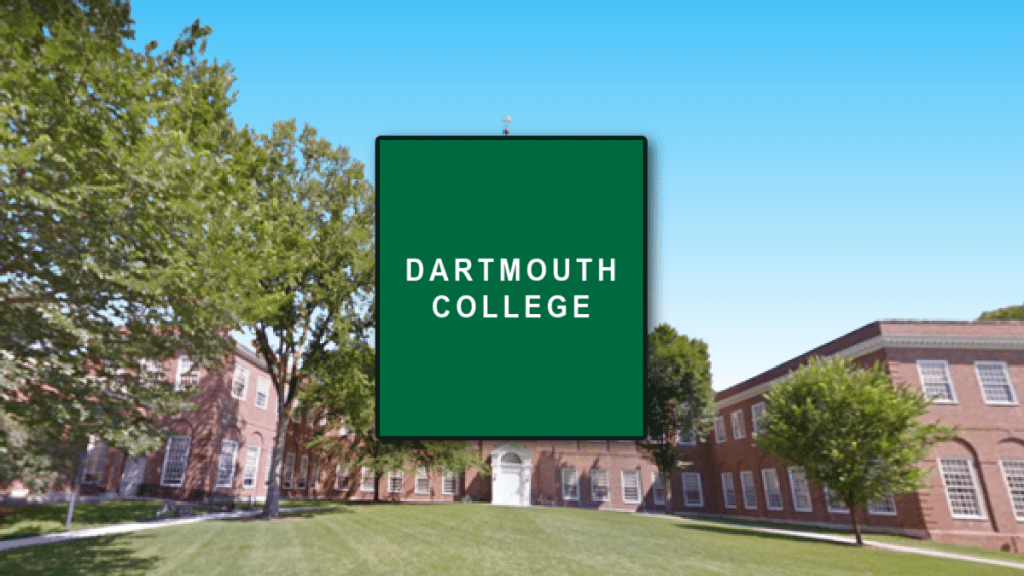
DARTMOUTH COLLEGE
6016 MCNUTT HALL, HANOVER, NEW HAMPSHIRE 03755, UNITED STATES
PRIVATE UNIVERSITY
RESEARCH UNIVERSITY
ABOUT


HARVARD UNIVERSITY
1350 MASSACHUSETTS AVENUE, CAMBRIDGE MASSACHUSETTS 02139, UNITED STATES
PRIVATE UNIVERSITY
RESEARCH UNIVERSITY

ABOUT
INC. RADCLIFFE COLLEGE
ESTABLISHED 1636
FEE-PAYING
CO-EDUCATIONAL
AGES 18+ (UNDERGRADUATE – POST-DOCTORATE)

JOHNS HOPKINS UNIVERSITY
JOHNS HOPKINS / JHU
3400 NORTH CHARLES STREET, BALTIMORE, MARYLAND 21218, UNITED STATES
PRIVATE UNIVERSITY
RESEARCH UNIVERSITY

ABOUT

MASSACHUSETTS INSTITUTE OF TECHNOLOGY
MIT
77 MASSACHUSETTS AVENUE, CAMBRIDGE, MASSACHUSETTS 02139, UNITED STATES
PRIVATE UNIVERSITY
INSTITUTE OF TECHNOLOGY
RESEARCH UNIVERSITY

ABOUT

PRINCETON UNIVERSITY
330 ALEXANDER STREET, PRINCETON, NEW JERSEY 08540, UNITED STATES
PRIVATE UNIVERSITY
RESEARCH UNIVERSITY

ABOUT

STANFORD UNIVERSITY
LELAND STANFORD JUNIOR UNIVERSITY / STANFORD
450 SERRA MALL, STANFORD, CALIFORNIA 94305, UNITED STATES
PRIVATE UNIVERSITY
RESEARCH UNIVERSITY

ABOUT

THE UNIVERSITY OF CHICAGO
CHICAGO / U OF C / UCHI / UCHICAGO
5801 SOUTH ELLIS AVENUE, CHICAGO, ILLINOIS 60637, UNITED STATES
PRIVATE UNIVERSITY
RESEARCH UNIVERSITY

ABOUT

UNIVERSITY OF PENNSYLVANIA
PENN / UPENN
1350 MASSACHUSETTS AVENUE, CAMBRIDGE MASSACHUSETTS 02139, UNITED STATES
PRIVATE UNIVERSITY
RESEARCH UNIVERSITY

ABOUT


INFORMATION

FULL NAME
IVY PLUS CONSORTIUM
CFR IVY+ | IVYPLUS EXCHANGE SCHOLARS PROGRAMME | IVY PLUS LIBRARIES CONFEDERATION | IVY PLUS SUSTAINABILITY CONSORTIUM | IVY PLUS WRITING CONSORTIUM | IVY+ ALUMNI RELATIONS CONFERENCE | IVY+ ANNUAL GIVING CONFERENCE | IVY+ FACULTY ADVANCEMENT NETWORK | IVY+ STUDENT GOVERNMENT CONFERENCE | IVY+ SUMMIT LEADERSHIP CONFERENCE
ESTABLISHED
1999
CONTACT DETAILS


UNITED STATES

ivpluslibraries.org | ivy.plus | facultyadvancementnetwork.org


SOCIAL MEDIA
* The Square (thesquare.com) was a social network for graduates of a selection of the world’s most famous and prestigious colleges and universities. Prior to the organisation being suspended, alumni of the following schools were invited to join the network:
Amherst College, Barnard College, Bates College, Boston College, Brandeis University, Brown University, Bryn Mawr College, Bucknell University, California Institute of Technology, California State University, Fresno, California State University, Fullerton, California State University, Long Beach, Carleton College, Carnegie Mellon University, Case Western Reserve University, Claremont McKenna College, Colby College, Colgate University, College of the Holy Cross, College of William & Mary, Colorado College, Columbia University, Connecticut College, The Cooper Union for the Advancement of Science and Art, Cornell University, Dartmouth College, Davidson College, Duke University, Emory University, Fordham University, Georgetown University, Georgia Institute of Technology, Grinnell College, Hamilton College, Harvard University, Harvey Mudd College, Haverford College, INSEAD, Johns Hopkins University, Kenyon College, Lafayette College, Lehigh University, London School of Economics and Political Science, Macalester College, Massachusetts Institute of Technology, McGill University, Middlebury College, Mount Holyoke College, New York University, Northwestern College, Northwestern University, Oberlin College, The Ohio State University, Pennsylvania State University, Pomona College, Princeton University, Purdue University, Rensselaer Polytechnic Institute, Rice University, Rutgers University, New Brunswick, Scripps College, Sewanee: The University of the South, Smith College, Stanford University, Swarthmore College, Syracuse University, Texas A&M University, Trinity College, Trinity University, Tufts University, Tulane University, Union College, University of Cambridge, University of California, Berkeley, University of California, Davis, University of California, Los Angeles, University of California, San Diego, University of California, Santa Barbara, The University of Chicago, University of Florida, University of Georgia, University of Illinois at Urbana-Champaign, The University of Iowa, University of Maryland, University of Michigan, The University of North Carolina at Chapel Hill, University of Notre Dame, University of Oxford, University of Pennsylvania, University of Pittsburgh, University of Richmond, University of Rochester, University of Southern California, The University of Texas at Austin, University of Virginia, University of Wisconsin, Vanderbilt University, Vassar College, Wake Forest University, Washington and Lee University, Washington University in St. Louis, Wellesley College, Wesleyan University, Williams College, Yale University, and Yeshiva University.
Discover more from FITZGABRIELS SCHOOLS
Subscribe to get the latest posts sent to your email.